
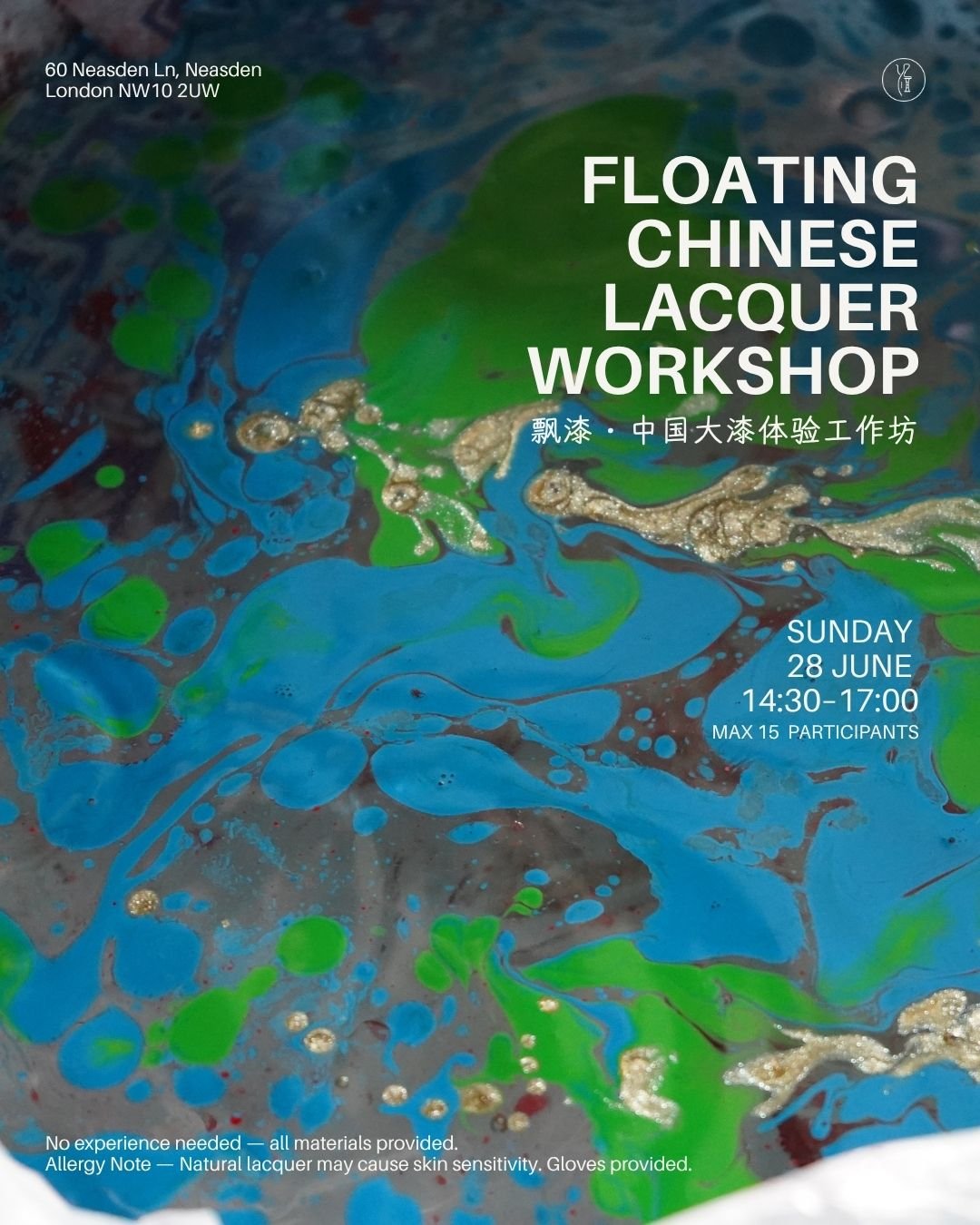
Floating Chinese Lacquer Workshop 飘漆 · 中国大漆体验工作坊
Floating Chinese Lacquer Workshop 飘漆 · 中国大漆体验工作坊
Join us for a playful and hands-on workshop exploring traditional Chinese lacquer (大漆) through the contemporary technique of floating lacquer.
Date & Time:
Sunday 28 June
14:30–17:00
Location:
Yi Crafts Studio, 60 Neasden Lane, London, NW10 2UW
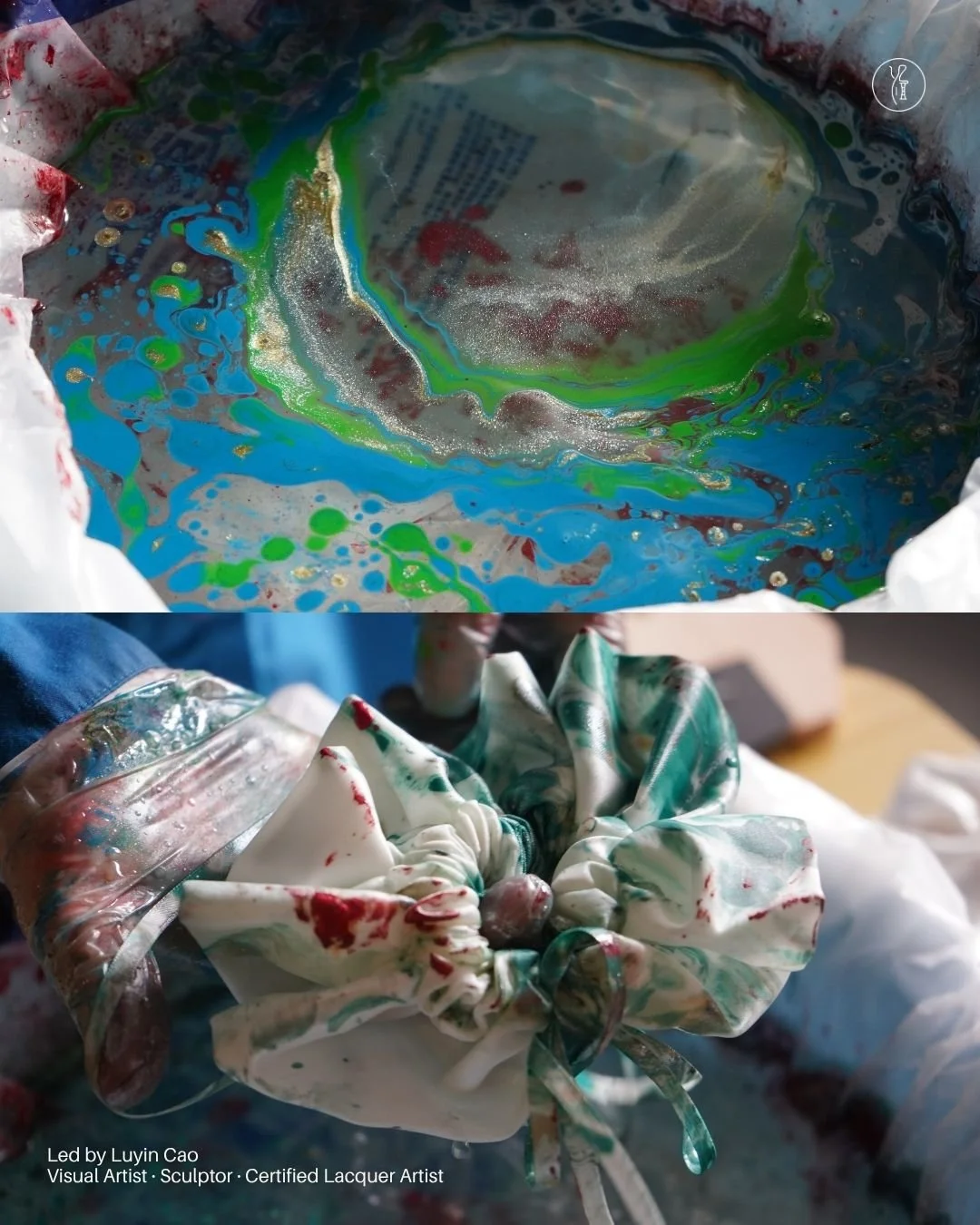
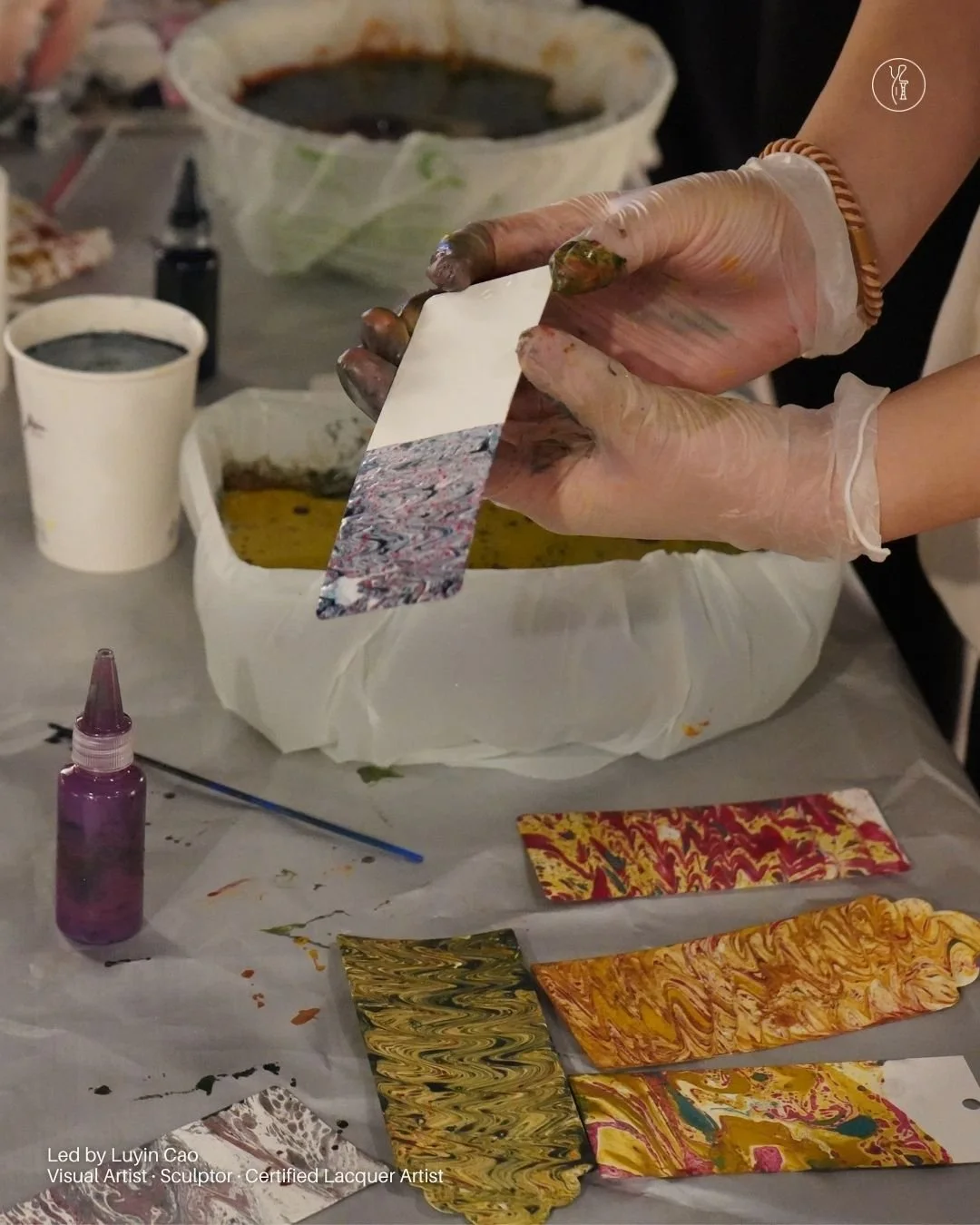
In this session, you will learn how to drip lacquer onto water, create delicate marbled patterns, and transfer them onto paper, bookmarks, and fabric scrunchies. The process is experimental, visually beautiful, and meditative — no prior experience is needed, just your curiosity and creativity.
The workshop will begin with a brief introduction to the history of Chinese lacquer, its cultural significance, and a variety of traditional lacquer techniques. You will also have the chance to learn more about the material qualities of lacquer and how this ancient craft continues to inspire contemporary making today.
During the hands-on session, you will first practise freely on paper before creating your own lacquered bookmarks and scrunchies. Each participant will be able to make:
* Unlimited paper practice pieces
* 8 floating lacquer bookmarks
* 2 jade-style tassels for the bookmarks
* 2 floating lacquer scrunchies
This is a rare opportunity to experience the beauty of Chinese lacquer up close and take home your own handmade floating lacquer creations.
Approximate Timings:
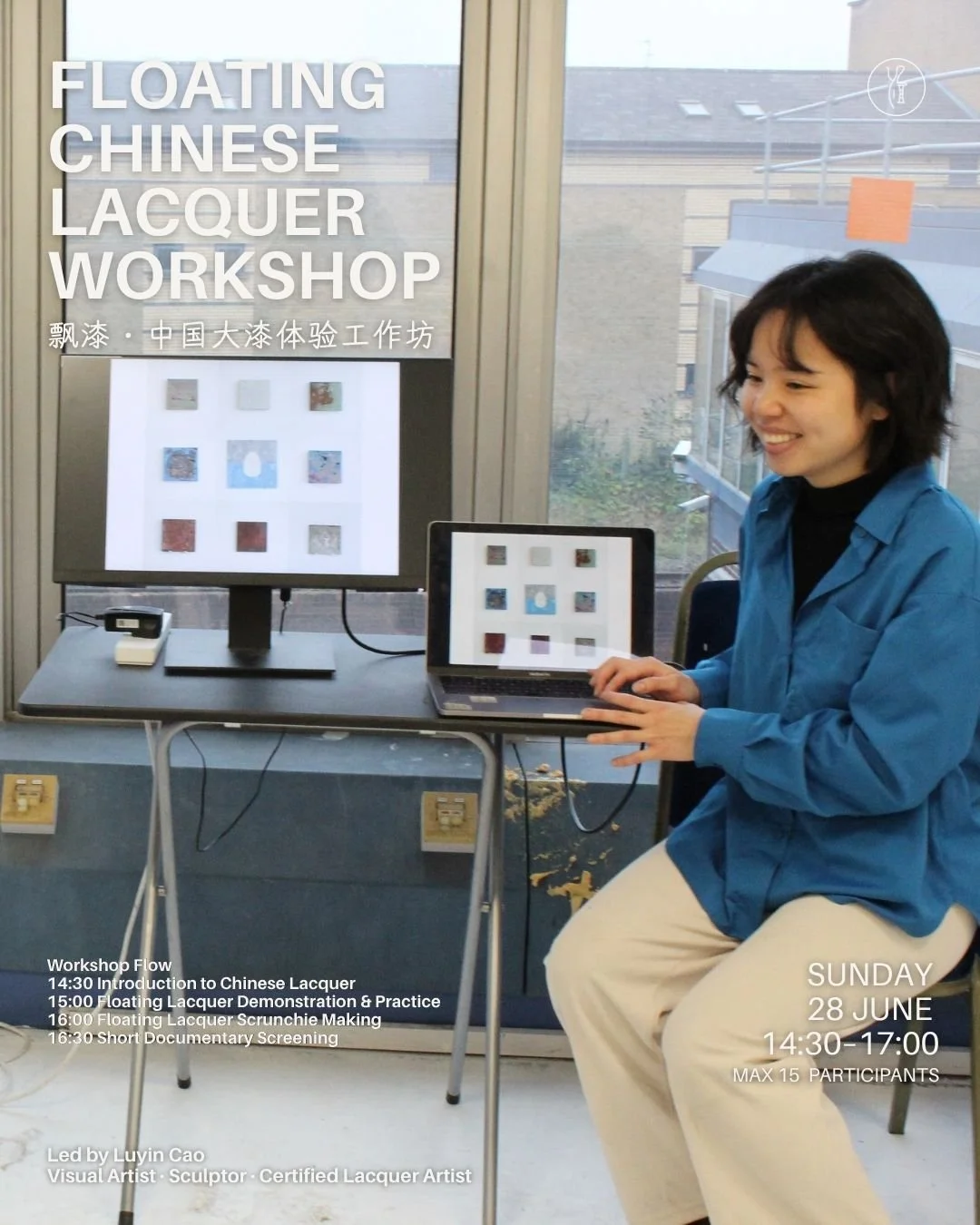
14:30–15:00 — Introduction to Chinese Lacquer
Gathering time, followed by a 20-minute introduction to Chinese lacquer, its history, cultural significance, and traditional techniques, with 5 minutes for questions.
15:00–16:00 — Floating Lacquer Demonstration & Hands-on Practice
The instructor will demonstrate the floating lacquer process. Participants will then create their own paper practice pieces and bookmarks.
16:00–16:30 — Floating Lacquer Scrunchie Making
The instructor will demonstrate how to create floating lacquer patterns on scrunchies. Participants will then make their own scrunchies.
16:30–17:00 — Chinese Lacquer Documentary Screening
The session will end with a short documentary screening about Chinese lacquer.
All materials are prepared for you — just bring yourself and your creativity.
What is Chinese Lacquer?
Chinese lacquer is a natural material derived from the sap of the lacquer tree (Toxicodendron vernicifluum). For thousands of years, it has been used in China as a durable, protective, and decorative coating for furniture, musical instruments, vessels, and artworks.
Across different historical periods, lacquer developed a wide range of distinctive styles and techniques, including inlay, carving, polishing, painting, and layered surface treatments. Today, lacquer remains a rich and evolving tradition that continues to inspire artists, craftspeople, and designers.
About the Workshop Leader:
This workshop will be led by Luyin Cao (@luyincao), a visual artist and sculptor, as well as a certified professional lacquer artist in China. Based between China and London, Luyin holds degrees from the China Academy of Art and the Slade School of Fine Art, UCL. Her practice combines traditional craftsmanship with contemporary artistic language, focusing on themes of nature, feminism, labour, perception, and embodied experience.
In this workshop, she will draw on her own lacquer practice and professional training to introduce participants to Chinese lacquer — an ancient and distinctive material — through the playful and experimental process of floating lacquer. Participants will experience the material up close and explore some of its possibilities within contemporary creative practice.
Allergy Awareness:
Chinese lacquer contains urushiol, a natural substance that may cause allergic reactions through direct skin contact. Gloves will be provided during the workshop to minimise exposure.
Participants with known sensitivities — especially those allergic to mango, which also contains urushiol — should exercise caution.
Please note: once fully dried and cured, lacquer is completely safe to touch. It becomes smooth, durable, and even food-safe.
Solvent Usage
A small amount of turpentine and orange oil will be used during the workshop. Please let us know in advance if you are sensitive to strong scents or solvents.
What to Wear:
Floating lacquer can get a little messy. While it does not usually stain clothes heavily, sleeves and cuffs are most at risk, and dried lacquer is very difficult to remove.
We recommend wearing old clothes and shoes, or bringing sleeve covers and an apron, so you can create freely and comfortably.