
London Lacquer Masterclass: Luodian 螺钿镶嵌 (mother-of-pearl inlay) × Maki-e 莳绘
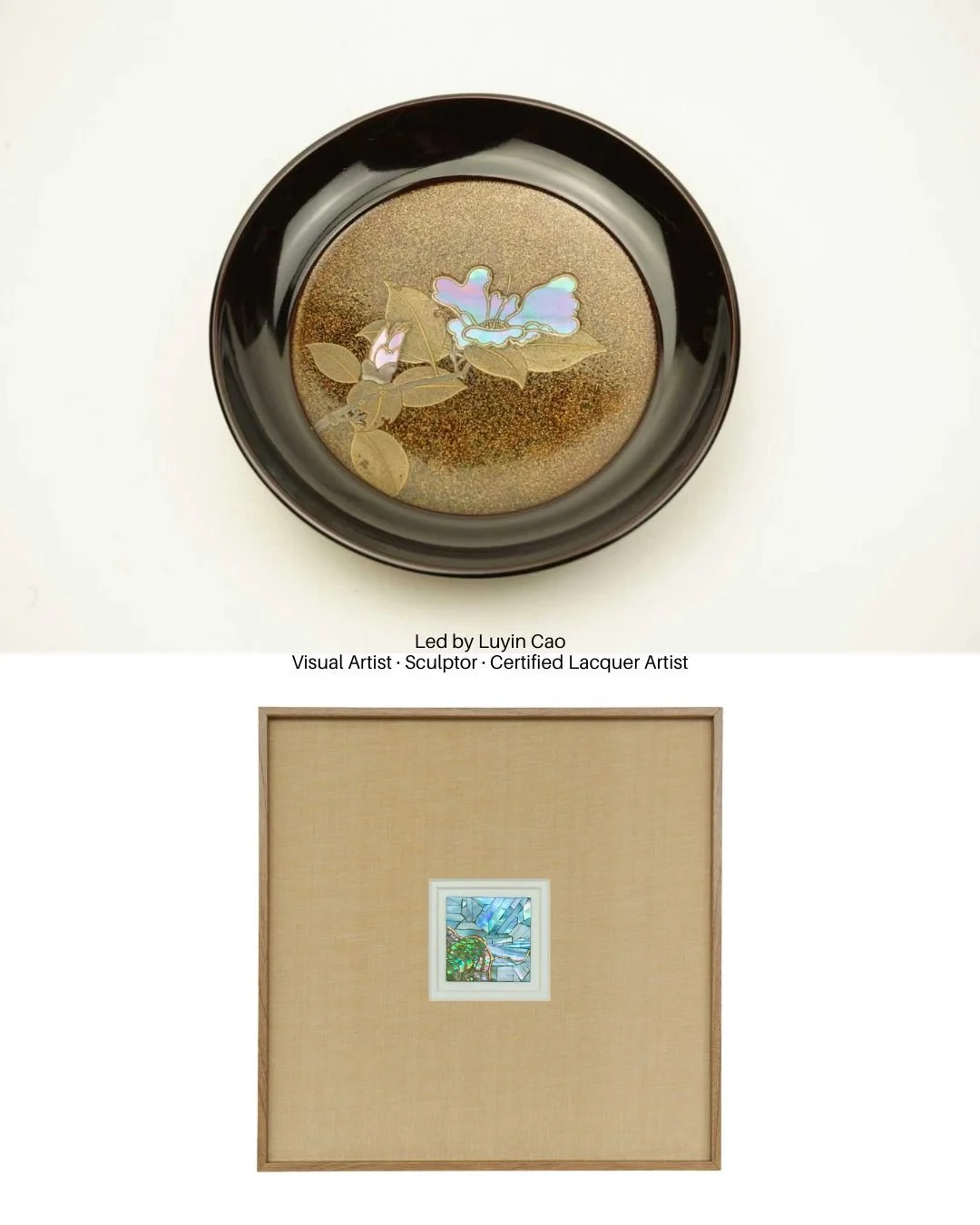
London Lacquer Masterclass: Luodian 螺钿镶嵌 (mother-of-pearl inlay) × Maki-e 莳绘
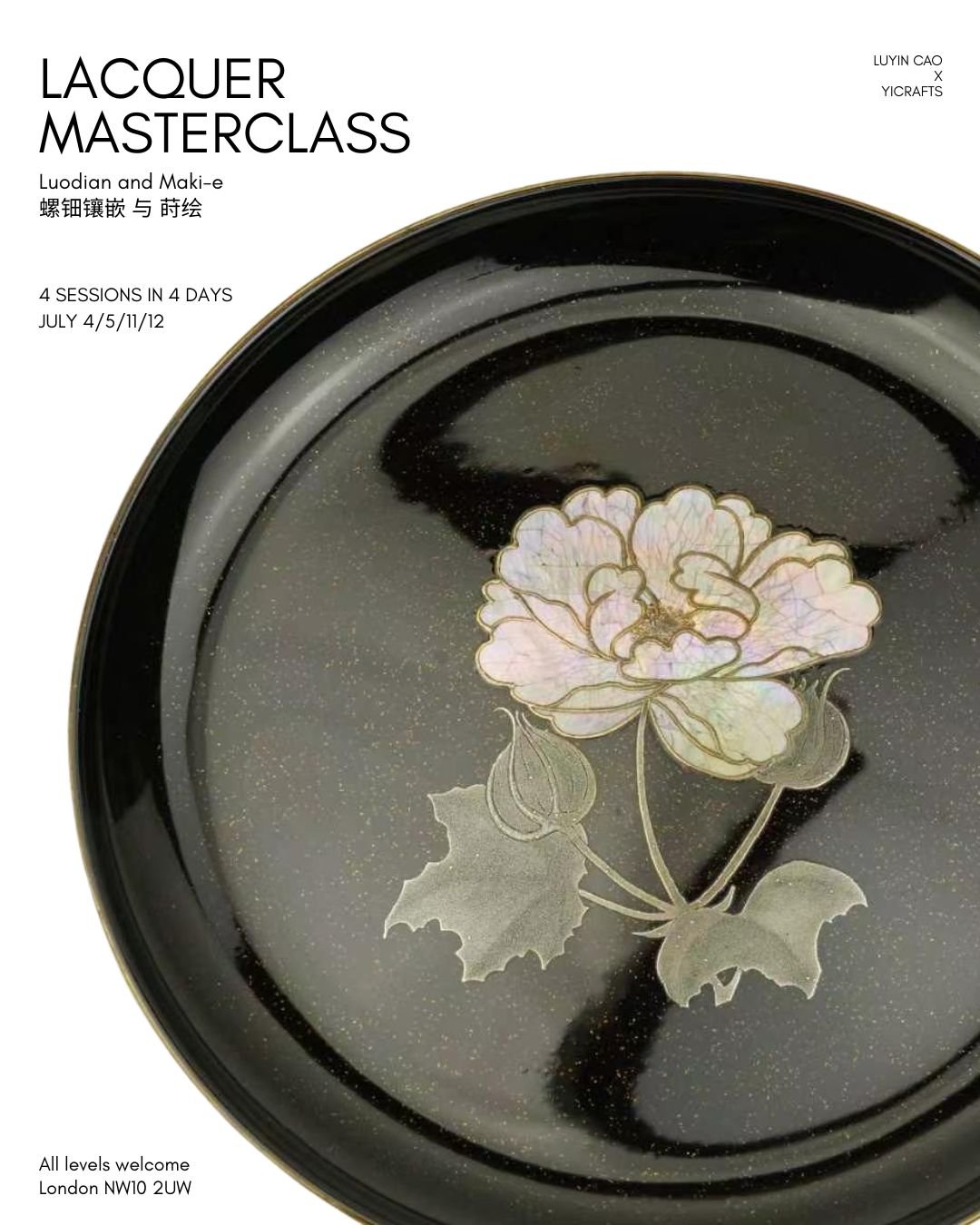
This four-session lacquer masterclass will focus on two classic decorative lacquer techniques: Luodian (mother-of-pearl inlay) × Makie
Combining theoretical introduction with hands-on making, the course will guide participants through the process of creating their own lacquer tray. You will learn how to decorate lacquerware with metal powders, apply mother-of-pearl inlay, sand and polish the surface, and gradually understand the material qualities of natural lacquer, the historical context of traditional lacquer techniques, and the unique sense of time and craftsmanship embedded in lacquer art.
This course is suitable for beginners, as well as artists, designers, makers, and craft enthusiasts interested in natural lacquer, traditional craft, East Asian lacquer art, material experimentation, and hand-making processes.
Course Content:
This course will introduce two traditional lacquer techniques:
Luodian (mother-of-pearl inlay) 螺钿镶嵌
Raden is a traditional decorative technique that uses naturally lustrous materials such as shell and mother-of-pearl. Participants will be introduced to different types of shell inlay and learn how to apply iridescent shell pieces onto the flat surface of a lacquer tray.
Maki-e Fundamentals 莳绘基础
Maki-e is a traditional decorative lacquer technique in which designs are painted with wet natural lacquer, before metal powders — such as gold, silver, tin, or copper powder — are sprinkled onto the surface. As the lacquer cures, the powder becomes fixed, creating a delicate and luminous decorative effect.
In this course, participants will learn the basic processes of powder sprinkling, powder fixing, and surface treatment.
Across the four sessions, participants will complete one lacquer tray combining raden inlay and basic maki-e techniques.
Course Dates & Times:
Session 1: Saturday 4 July
10:00–13:00
Session 2: Sunday 5 July
14:00–17:00
Session 3: Saturday 11 July
10:00–13:00
Session 4: Sunday 12 July
14:00–17:00
This is a four-session course. Participants are encouraged to attend all sessions, as each stage builds on the previous one.
Location: Yi Crafts Studio, 60 Neasden Lane, London, NW10 2UW
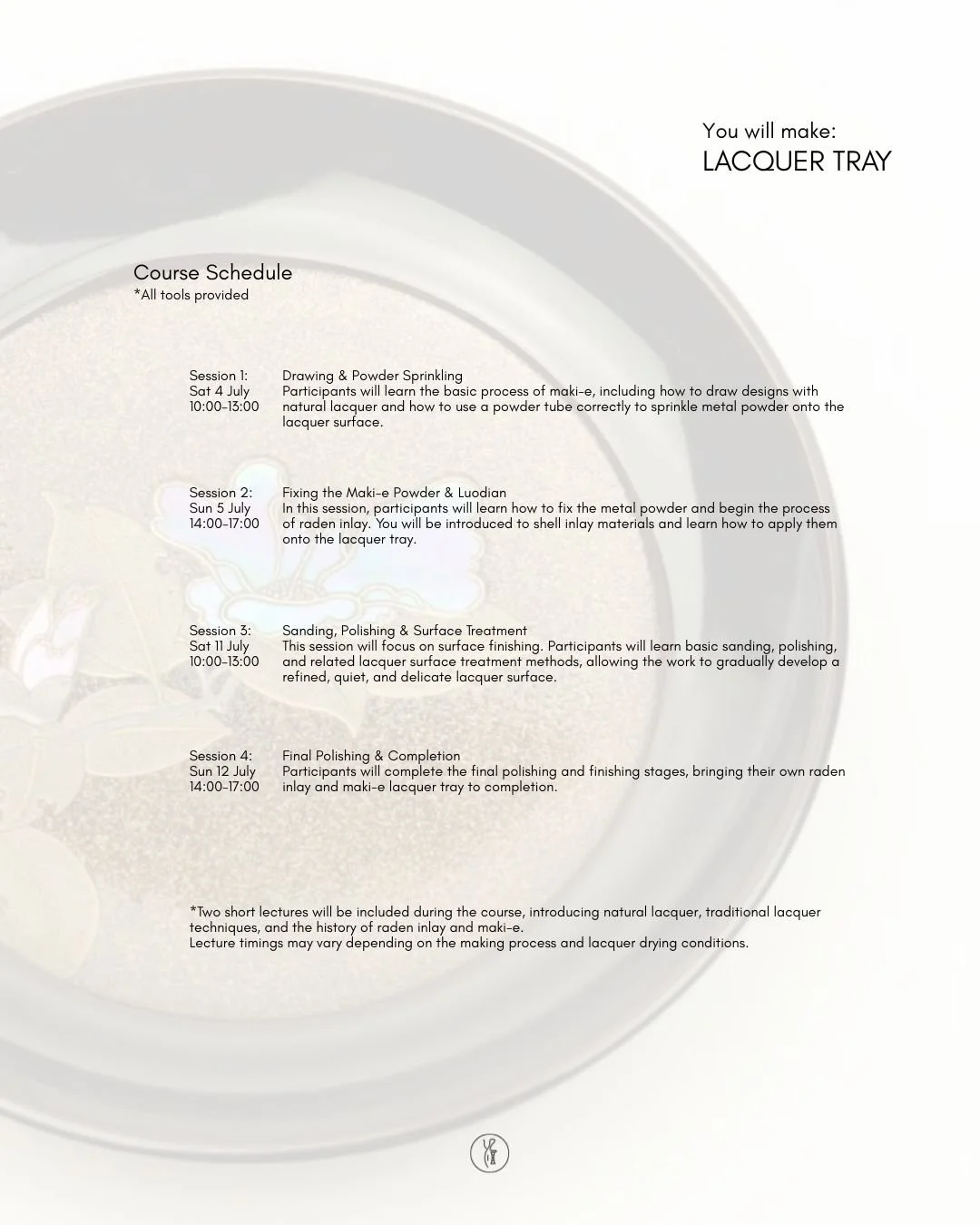
Course Schedule:
Session 1: Maki-e Fundamentals — Drawing & Powder Sprinkling
Participants will learn the basic process of maki-e, including how to draw designs with natural lacquer and how to use a powder tube correctly to sprinkle metal powder onto the lacquer surface.
Session 2: Fixing the Maki-e Powder & Raden Inlay
In this session, participants will learn how to fix the metal powder and begin the process of raden inlay. You will be introduced to shell inlay materials and learn how to apply them onto the lacquer tray.
Session 3: Sanding, Polishing & Surface Treatment
This session will focus on surface finishing. Participants will learn basic sanding, polishing, and related lacquer surface treatment methods, allowing the work to gradually develop a refined, quiet, and delicate lacquer surface.
Session 4: Final Polishing & Completion
Participants will complete the final polishing and finishing stages, bringing their own raden inlay and maki-e lacquer tray to completion.
Two short lectures on lacquer will be included during the course. Topics will include the material qualities of natural lacquer, traditional lacquer techniques, and the historical background of raden inlay and maki-e. The exact timing of the lectures will be adjusted flexibly according to the making process and the drying condition of the lacquer surface.
What Will You Make?
Each participant will complete one lacquer tray combining raden inlay and basic maki-e techniques.
The finished work will bring together the deep, warm quality of natural lacquer, the flowing iridescence of shell inlay, and the subtle shimmer of metal powder.
Materials Provided
Basic materials and tools will be provided, including:
* Lacquer tray
* Natural lacquer / urushi
* Tin powder
* Copper powder
* Powder tube
* Brushes
* White mother-of-pearl shell
* Carving tools and basic hand tools
* Sanding and polishing materials
White mother-of-pearl shell is included in the basic course materials. If participants would like to use other types of shell inlay, these may be available for purchase from the instructor during the course.
Who Is This Course For?
This course is suitable for:
* Beginners interested in natural lacquer and traditional lacquer art
* Participants who would like to gain a systematic introduction to raden inlay and basic maki-e techniques
* Artists, designers, and craft enthusiasts
* Anyone interested in East Asian traditional craft, material experimentation, slow craft, and surface decoration
No previous lacquer experience is required. The course will begin with basic knowledge and fundamental techniques.
About the Instructor:
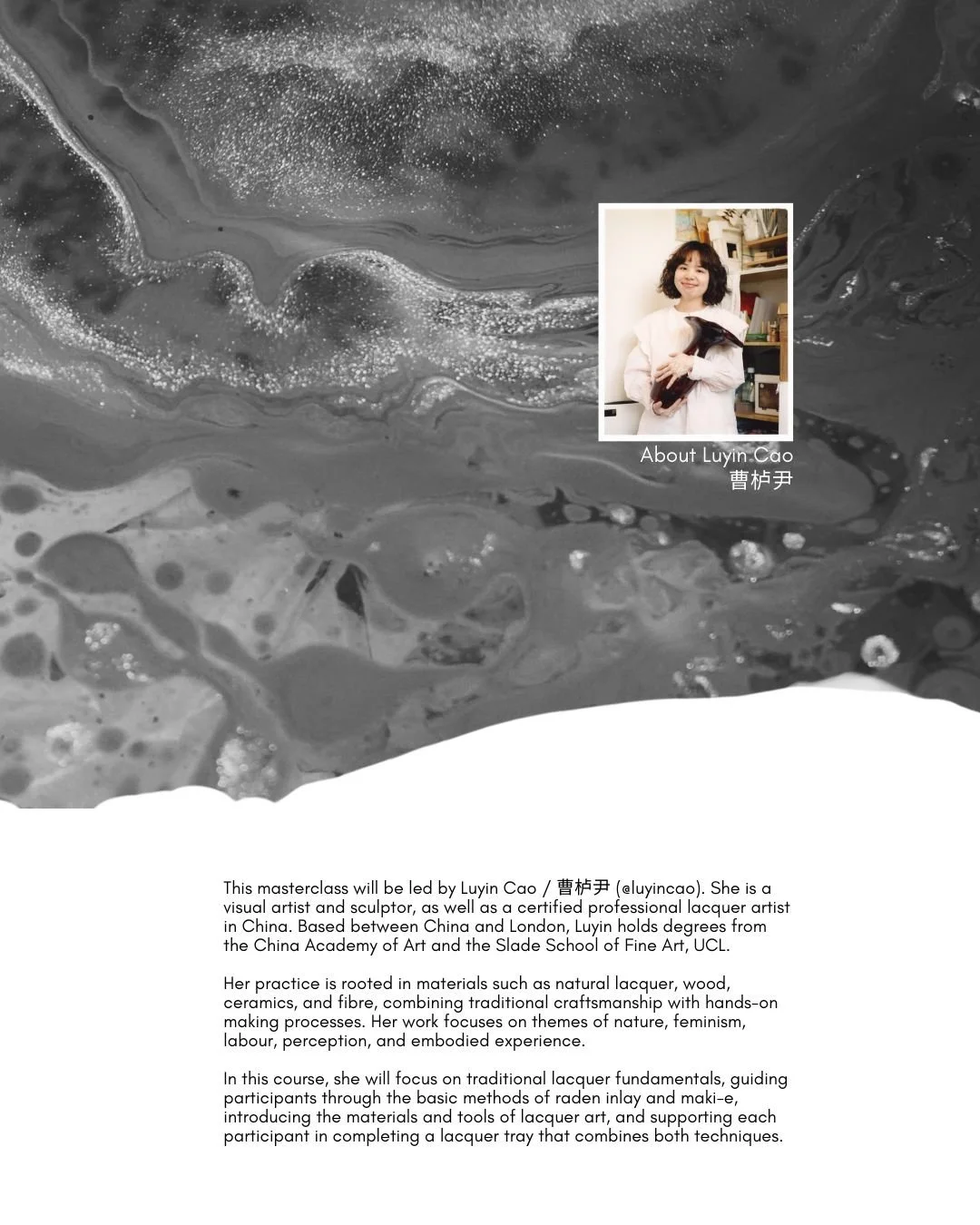
This masterclass will be led by Luyin Cao / 曹栌尹 (@luyincao). She is a visual artist and sculptor, as well as a certified professional lacquer artist in China. Based between China and London, Luyin holds degrees from the China Academy of Art and the Slade School of Fine Art, UCL.
Her practice is rooted in materials such as natural lacquer, wood, ceramics, and fibre, combining traditional craftsmanship with hands-on making processes. Her work focuses on themes of nature, feminism, labour, perception, and embodied experience.
In this course, she will focus on traditional lacquer fundamentals, guiding participants through the basic methods of raden inlay and maki-e, introducing the materials and tools of lacquer art, and supporting each participant in completing a lacquer tray that combines both techniques.
Allergy Awareness:
Natural lacquer contains urushiol, a natural substance that may cause allergic reactions through direct skin contact. Gloves and basic protective materials will be provided during the course to minimise skin exposure.
If you know that you are sensitive to natural lacquer, plants from the lacquer tree family, or mangoes, which contain similar allergenic compounds, please exercise caution before booking.
Please note: once fully dried and cured, natural lacquer is safe to touch. It becomes smooth, durable, and long-lasting.
Solvent Usage
A small amount of solvent may be used during the course. If you are sensitive to strong scents, turpentine, orange oil, or other solvents, please let us know in advance.
What to Wear
Lacquer work can be messy, and dried lacquer is very difficult to remove from clothing.
We recommend wearing old clothes and shoes, or bringing sleeve covers and an apron, so that you can work more freely and comfortably.